
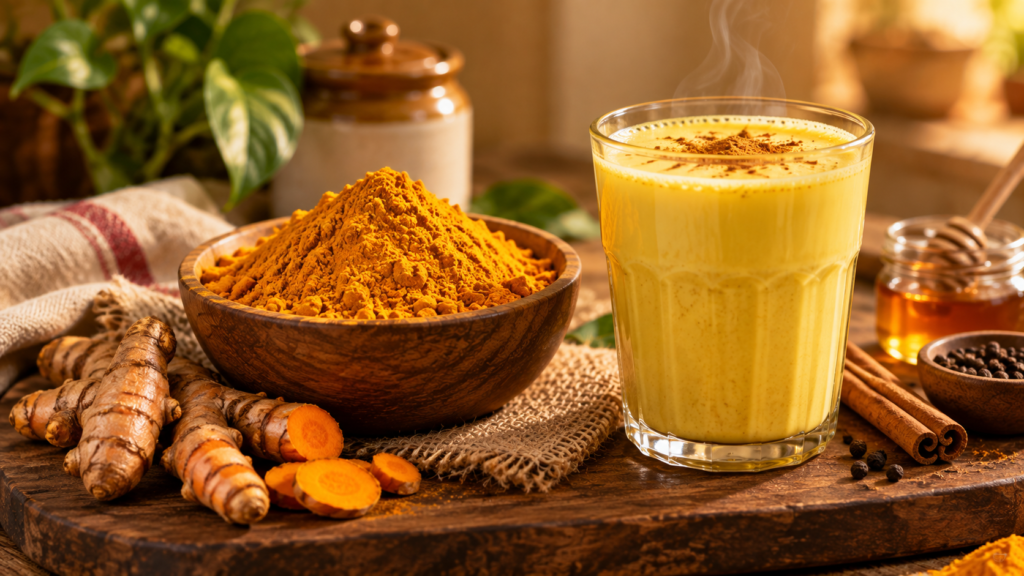
Haldi is one of those things every Indian home just trusts. A pinch goes into the food, a spoon goes into warm milk when someone’s unwell, and it turns up in skincare and remedies passed down for generations. But what does haldi actually do? Here’s an honest, no-hype look at the benefits — what’s real, and how to actually get them.
What makes haldi special: curcumin
Most of haldi’s reputation comes down to one natural compound: curcumin. It’s what gives turmeric its golden colour, and it’s the part that’s been studied the most for its antioxidant and anti-inflammatory properties. When people talk about the “benefits of haldi,” curcumin is usually the reason. If you want the full background on the spice itself, see our haldi powder guide
Traditionally valued for inflammation and joints
Haldi has long been used in Indian homes for aches, stiffness, and everyday inflammation — which is why it turns up in so many home remedies for joints. Curcumin’s anti-inflammatory nature is the reason behind this old wisdom. It’s not a painkiller and not a cure, but it’s a gentle, everyday support that generations have relied on.
The immunity connection — haldi doodh
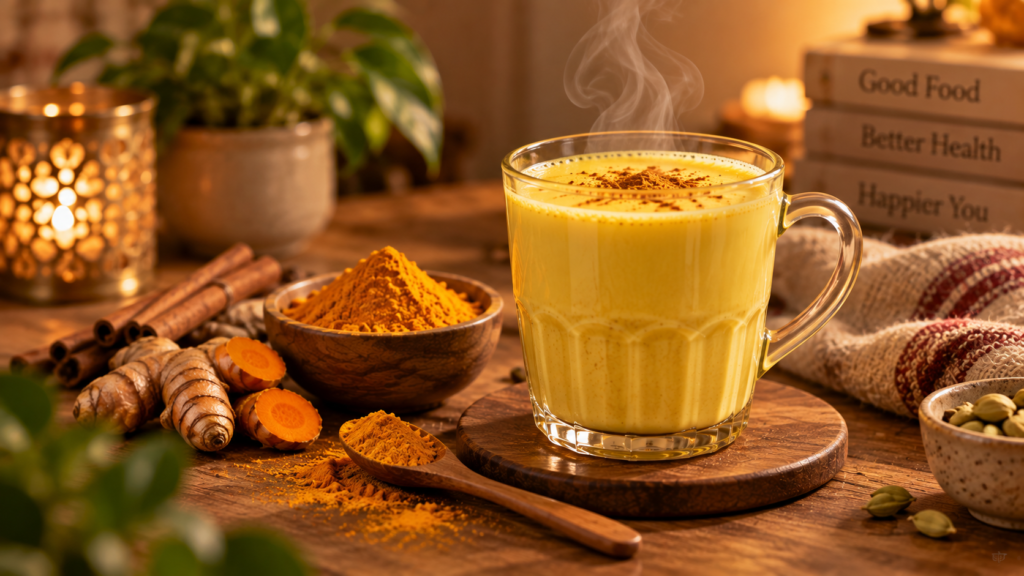
The classic haldi doodh (turmeric milk, or “golden milk”) is the most familiar way Indians use turmeric for wellbeing. Warm milk with a little haldi is the go-to at the first sign of a cold or a rough day. It’s comforting, and it’s how most of us first met turmeric outside of food.
Good for the skin, traditionally
Long before it was a trend, haldi was part of Indian skincare — in ubtan before weddings, in home face packs, in remedies for a clearer, calmer complexion. Nothing miraculous, but its long history in skincare is exactly why it’s still used this way today.
Antioxidant support and digestion
As an antioxidant, haldi helps the body deal with everyday wear and tear, and it’s traditionally considered good for digestion too. You’re never eating it in large amounts, but a little in your daily food, day after day, quietly adds up — which is the honest way to think about most everyday spices.
How to actually get the benefits
Two simple things make a real difference:
- Pair it with black pepper. A pinch of pepper helps your body absorb curcumin far better — which is why so many traditional recipes naturally combine the two.
- Use haldi that’s actually haldi. Old, dull, or adulterated turmeric gives you the colour but little of the goodness. Freshly ground, pure haldi is what carries real curcumin — and if you want to be sure yours is genuine, here’s how to check if your haldi is pure
Frequently Asked Questions
Haldi is traditionally valued for its anti-inflammatory and antioxidant curcumin, for immunity (haldi doodh), for skin, and for digestion. It’s a wholesome everyday spice, not a medicine.
As a warm, comforting drink with turmeric’s natural goodness, it’s a long-loved home remedy. It’s best seen as everyday support, not a cure for illness.
Yes. The benefits come mainly from curcumin, which lives in real, freshly ground turmeric. Dull, old, or adulterated haldi gives you colour but little of the actual goodness.
Pair it with a pinch of black pepper, which helps your body absorb curcumin, and use pure, freshly ground haldi rather than an old packet.
Want haldi with real colour and real goodness — freshly ground and honestly made? Chat with us on WhatsApp for pure haldi and bulk orders.
Milawat se door, swaad se bharpoor.