
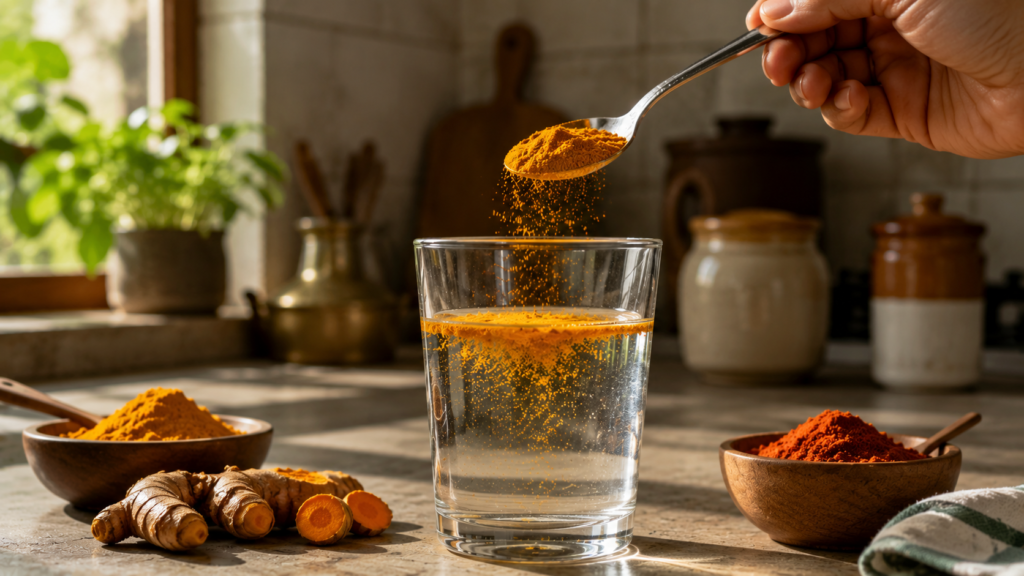
Most of us buy spices on trust. The packet looks bright, the price feels fair, and we assume what’s inside is what it says. But milawat — adulteration — is a real worry in Indian kitchens, and the frustrating part is you usually can’t tell just by looking. The good news: you can check a lot of it at home, with nothing more than a glass of water and your own senses. Here’s how.
Why colour tells you nothing
The first thing to unlearn is that “bright” means “good”. A deep red chilli powder or a glowing yellow haldi feels premium — but colour is the easiest thing to fake, and often the brightest powders are the ones you should trust least. Real spice colour is honest and slightly muted, not neon. So put the colour test aside and use the ones below instead.
The water test for red chilli powder
Take a glass of water and gently sprinkle a little red chilli powder on top. Pure chilli powder floats first and then slowly settles, leaving the water fairly clear. If you see colour streaking down quickly or the water turning cloudy red almost at once, that’s a reason to be cautious — real chilli doesn’t let go of its colour that easily.
The water test for haldi (turmeric)
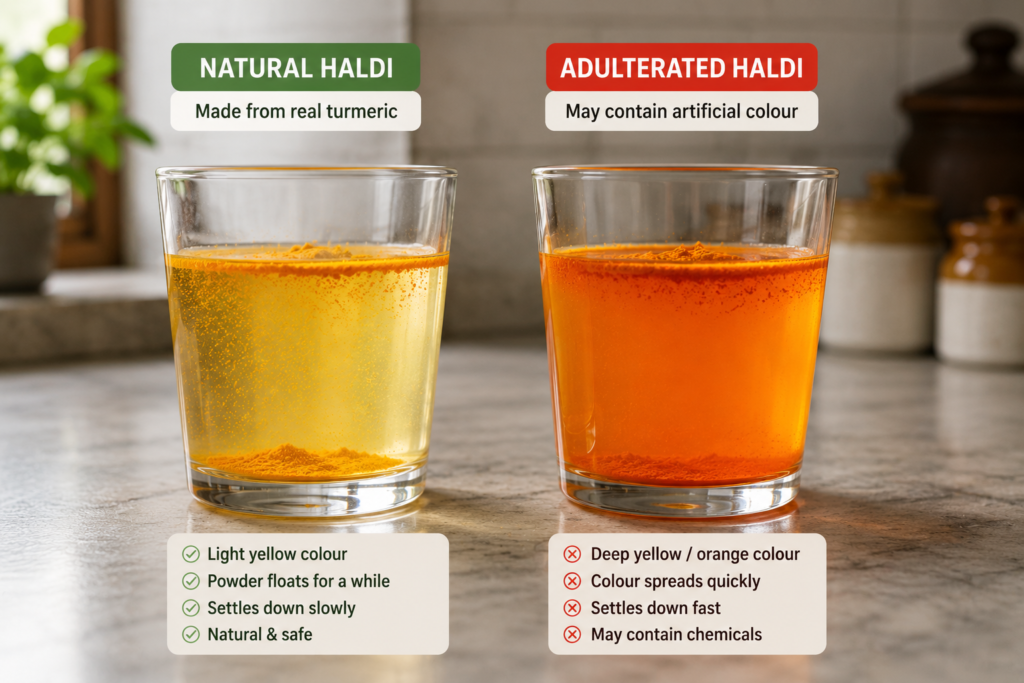
Mix a small spoon of haldi into a glass of warm water and let it sit. Pure turmeric settles at the bottom and gives the water a soft, light yellow. If the water turns a deep, harsh orange or you see a grainy residue that shouldn’t be there, treat it as a warning sign.
The rub test for dhania (coriander) powder
Dhania is often bulked up because it’s easy to stretch. Rub a pinch of coriander powder between your fingers. Real dhania feels slightly coarse and grainy, and smells warm and fresh. If it feels too fine and smooth — almost like flour — or smells flat and dusty, question it. A quick way to be sure is to buy from someone who grinds fresh, which we cover in our coriander powder guide
What pure spice should look, smell and feel like
Across every spice, the honest signs are the same:
- The smell is strong and alive the moment you open it — not flat or dusty.
- The colour is natural and slightly muted, not neon-bright.
- The texture feels real — a little coarse — not powder-fine like starch.
- It doesn’t leave odd residue or bleed colour instantly in water.
None of this needs a lab. Your nose and a glass of water do most of the work.
The real fix: buy spice that’s actually spice
Home tests are useful, but the honest truth is you shouldn’t have to test your masala at all. The reason milawat exists is that ground powder is easy to stretch and dull once it leaves sight. That’s exactly why we grind fresh in small batches at Gamak — clean whole spices, ground and packed with nothing added for colour or weight. When the spice is made honestly in the first place, the water test just confirms what you already know.
Frequently Asked Questions
Use simple water tests — sprinkle red chilli or mix turmeric into water and watch how the colour behaves — and trust your senses. Pure spice smells strong, feels slightly coarse, and doesn’t bleed colour instantly.
No — often the opposite. Real spice colour is natural and a little muted. Very bright, uniform colour can be a sign that something was added to catch your eye.
Buy from a source that grinds fresh and stands behind its quality, rather than loose powder of unknown origin. Freshly ground, honestly made spice is the simplest way to skip the worry.
Want spice you never have to test? Chat with us on WhatsApp for pure, freshly ground masala and bulk orders.
Milawat se door, swaad se bharpoor.