
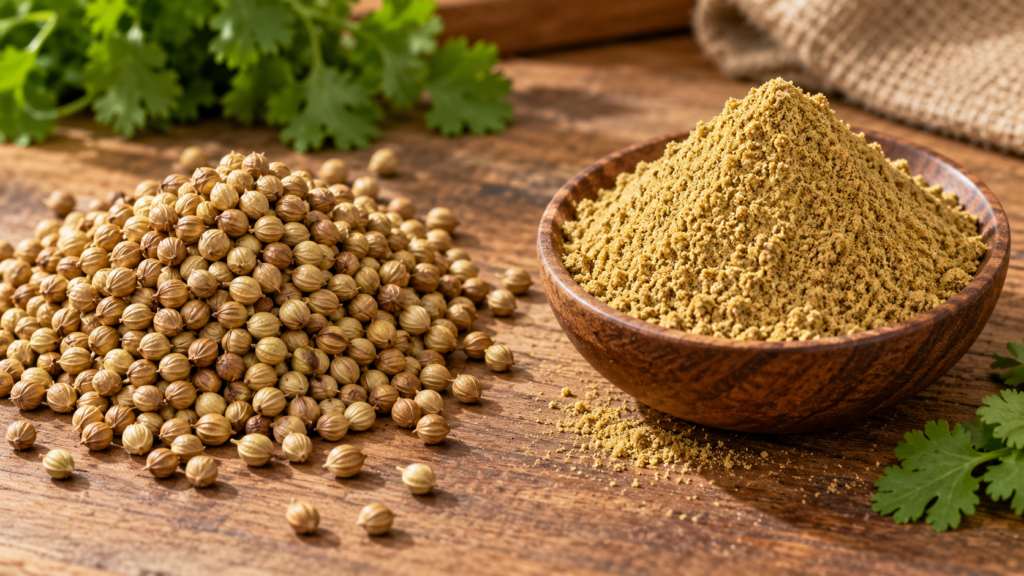
Coriander shows up in an Indian kitchen in two forms — whole seeds (sabut dhania) and the ground powder (dhania powder). They come from the same plant, but they behave differently in cooking, and knowing when to use which makes a real difference. Here’s the simple version.
The basic difference
Coriander seeds are the whole, dried seeds of the coriander plant. Coriander powder is just those same seeds, ground fine. That’s the only real difference in what they are — everything else comes down to how that changes their flavour and how you use them. For a full breakdown of the spice itself, see our coriander powder guide
The flavour and aroma difference
This is the part that matters. A whole coriander seed keeps its aroma locked inside, protected, until it’s crushed or ground. The moment you grind it, the natural oils release — which is why fresh powder smells strong and a whole seed smells mild until you break it.
So seeds hold their flavour longer, and powder delivers it faster. Neither is “better” — they’re just built for different jobs.
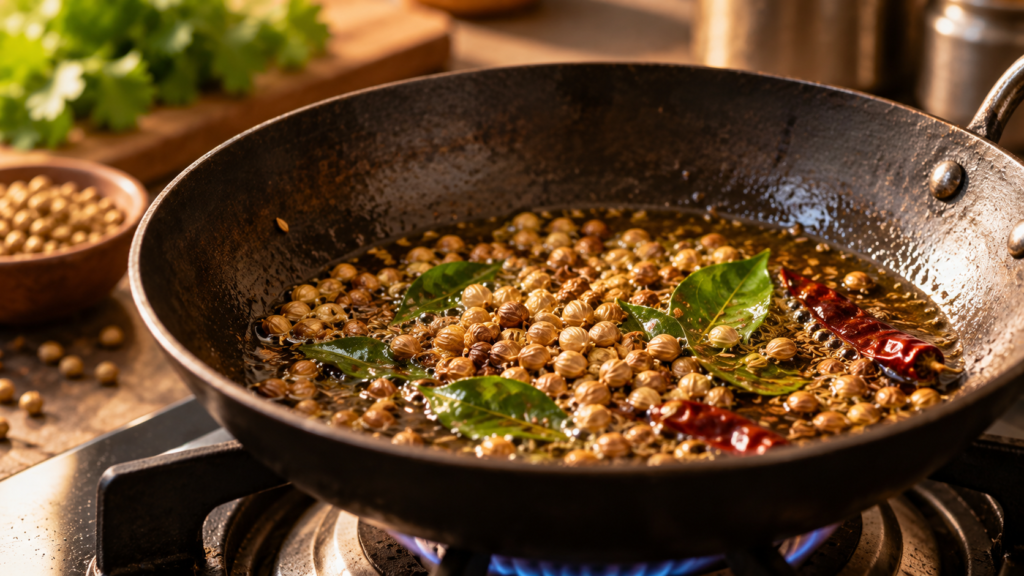
When to use whole coriander seeds
Reach for whole seeds when you want texture or a slow release of flavour:
- In a tadka or tempering, where they crackle in hot oil and release aroma gradually.
- In slow-cooked dishes and pickles, where they can sit and infuse over time.
- Lightly dry-roasted and then coarsely crushed, for a deeper, nuttier flavour.
When to use coriander powder
Reach for the powder when you want the flavour to blend in evenly and quickly:
- In everyday gravies and sabzis, added with the masala base.
- In marinades, where it mixes smoothly into curd or paste.
- In spice blends and masalas, where a fine, even texture matters.
If you want the full detail on this, we’ve written a separate post on how to use coriander powder in cooking
Freshness: why powder needs more care
Here’s the trade-off. Whole seeds can sit in your dabba for a year and stay fine, because their aroma is still sealed inside. Powder can’t — once ground, it slowly loses its flavour with every passing week. That’s why the freshness of your coriander powder matters far more than the freshness of your seeds, and why freshly ground dhania — like the small batches we grind at Gamak — tastes so much stronger than an old packet.
Can you swap one for the other?
Yes, with a little sense. If a recipe calls for powder and you only have seeds, dry-roast the seeds lightly and grind them fresh — you’ll actually get a better result. Going the other way, powder can stand in for seeds in most cooked dishes, though you’ll lose the texture and the slow tempering effect.
Frequently Asked Questions
They come from the same plant — powder is simply ground coriander seeds. The difference is in texture, aroma, and how you use them.
Whole seeds last much longer because their aroma stays sealed inside. Ground powder slowly loses its flavour, so it’s best used fresh.
Yes — lightly dry-roast the seeds, then grind them fresh. This gives a stronger aroma than a packet that’s been sitting for months.
Want the convenience of powder without losing the aroma of fresh seeds? Chat with us on WhatsApp ← for freshly ground dhania and bulk orders.
Milawat se door, swaad se bharpoor.